


Beyond A2M Week
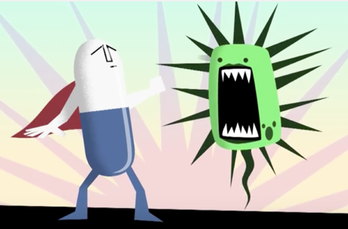
As we wrap up A2M week, it’s important not to lose sight of one of the most threatening yet neglected issues facing humanity – antibiotic resistance. According to the World Health Organization, “globally 480 000 people develop multi-drug resistant TB each year, and drug resistance is starting to complicate the fight against HIV and malaria.” [1] Multi-drug resistant (MDR) microorganisms are a product of natural selection. Bacteria and viruses that acquire mutations that impede with antibiotic efficacy pass down their genes and give rise to strains of “superbugs” [2].
The urgent issue of antibiotic resistance further compounds the issue of access to medicines, many of which are lucratively priced. As more medicines are needed to combat multi-drug resistant strains, the exponentially higher the price for patients. Patients suffering from neglected diseases are especially vulnerable. A recent article on drug-resistant tuberculosis (DR-TB) published by MSF features Simphiwe Zwide, a South African man fighting DR-TB [3]. He follows an intensive MDR-TB treatment regime that consists of ingesting up to 26 pills each morning. South Africa has one of the highest burdens of TB and DR-TB in the world, with around 20 000 people diagnosed with DR-TB in 2015.
During A2M week, we advocated against profit-driven research, which neglects research on antibiotic resistance. According to a 2015 peer-reviewed paper, “of the 18 largest pharmaceutical companies 15 abandoned the antibiotic field” and “antibiotic research conducted in academia has been scaled back as a result of funding cuts”. Big pharmaceutical companies tend to neglect antibiotic development because antibiotics are widely used for short-term conditions and are deemed not as profitable as investing in drugs that treat chronic conditions [4].
Beyond A2M week, we must push researchers, pharmaceutical companies, and government to increase research on antibiotic resistance. In an evolutionary “arms race”, novel drugs that have the ability to eradicate superbugs unlike current drugs on the market must be developed. Furthermore, education on antibiotic use is essential. Misuse and overuse of antibiotics have contributed immensely to antibiotic resistance. Margaret Chan, Director General of the World Health Organization, warned in 2012, “in terms of new replacement antibiotics, the pipeline is virtually dry. A post-antibiotic era means, in effect, an end to modern medicine as we know it. Things as common as strep throat or a child’s scratched knee could once again kill.”
Further readings:
1. WHO Antimicrobial Resistance Factsheet: http://www.who.int/mediacentre/factsheets/fs194/en/
2. TED-Ed Video on Antibiotic Resistance: https://www.youtube.com/watch?v=znnp-Ivj2ek
3. MSF Article on DR-TB in South Africa: http://www.msf.org/en/article/photo-story-treating-drug-resistant-tb-western-cape-south-africa
4. Peer-reviewed article on Antibiotic Resistance: https://www.ncbi.nlm.nih.gov/pmc/articles/PMC4378521/


Comments